Introduction
Cybercrime is growing at an alarming rate, and phishing scams are one of the most common threats faced by businesses today. Unfortunately, small businesses are often the easiest targets. Recently, a small business in India lost a staggering ₹15 lakhs in a phishing scam, proving how dangerous online fraud can be. In this blog, we’ll uncover how the scam happened, the mistakes made, and most importantly, how you can protect your own business from such attacks.
What is a Phishing Scam?
Phishing is a type of cyberattack where criminals trick victims into revealing sensitive information such as login credentials, financial details, or OTPs. Typically, phishing messages come in the form of emails, SMS, or fake websites that look legitimate.
The Incident: How the Business Lost ₹15 Lakhs
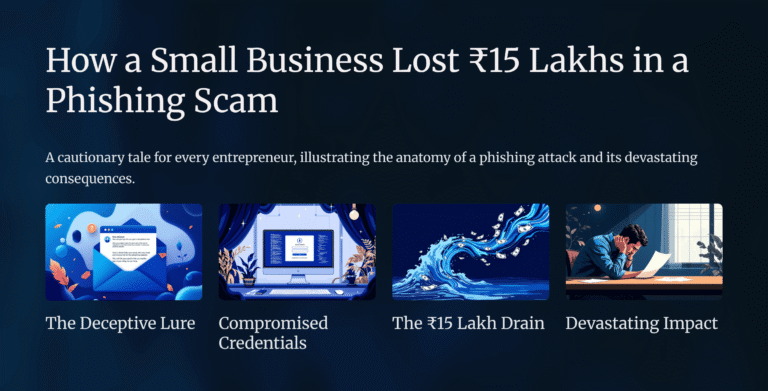
The victim, a small manufacturing company, received what seemed like an official email from their bank. The message looked authentic—it had the bank’s logo, branding, and even a “secure” looking link.
The email claimed that their account required urgent verification.
The unsuspecting staff clicked the link and entered their net banking details.
Within hours, fraudsters transferred ₹15 lakhs to multiple accounts.
By the time the business realized, it was too late.
👉 This incident highlights how a single click can cause massive financial loss.
Why Small Businesses Are Easy Targets
Many people assume cybercriminals only attack large corporations. However, small businesses often have:
Limited cybersecurity awareness.
Weak email security filters.
Employees who are not trained to recognize scams.
Fewer resources to recover from financial losses.
As a result, they become prime targets for phishing scams.
Warning Signs of a Phishing Email
To avoid becoming the next victim, here are some red flags to watch for:
Emails that create urgency or fear (“Your account will be blocked today!”).
Spelling or grammar mistakes in the message.
Unusual sender addresses (e.g., bank-secure@xyzmail.com).
Links that look suspicious or slightly misspelled versions of real websites.
How to Protect Your Business from Phishing Attacks
Thankfully, phishing scams can be prevented with the right precautions:
Verify Before Clicking – Always confirm with the bank or service provider through official channels.
Check the URL – Hover over links to ensure they lead to legitimate websites.
Enable Two-Factor Authentication (2FA) – Adds an extra layer of protection.
Train Employees – Regular awareness sessions about phishing.
Invest in Cybersecurity Tools – Use email filtering and anti-malware solutions.
Report Immediately – If you suspect fraud, contact your bank and cybercrime helpline.
Conclusion
The story of this small business losing ₹15 lakhs is a painful reminder that phishing attacks are real and dangerous. With better awareness, security training, and caution, such losses can be avoided. Remember, in cybersecurity, prevention is always better than cure.